Every guest deserves their own menu.
TasteGraph rebuilds every guest's menu around their own taste — reordering dishes, surfacing what they'll actually love, and giving you the real analytics behind every recommendation. It keeps guests safe from their allergens too.
Restaurant owners are building their menu on TasteGraph right now

Two taps per dish. 41% of tables answer.
Four things doing the real work
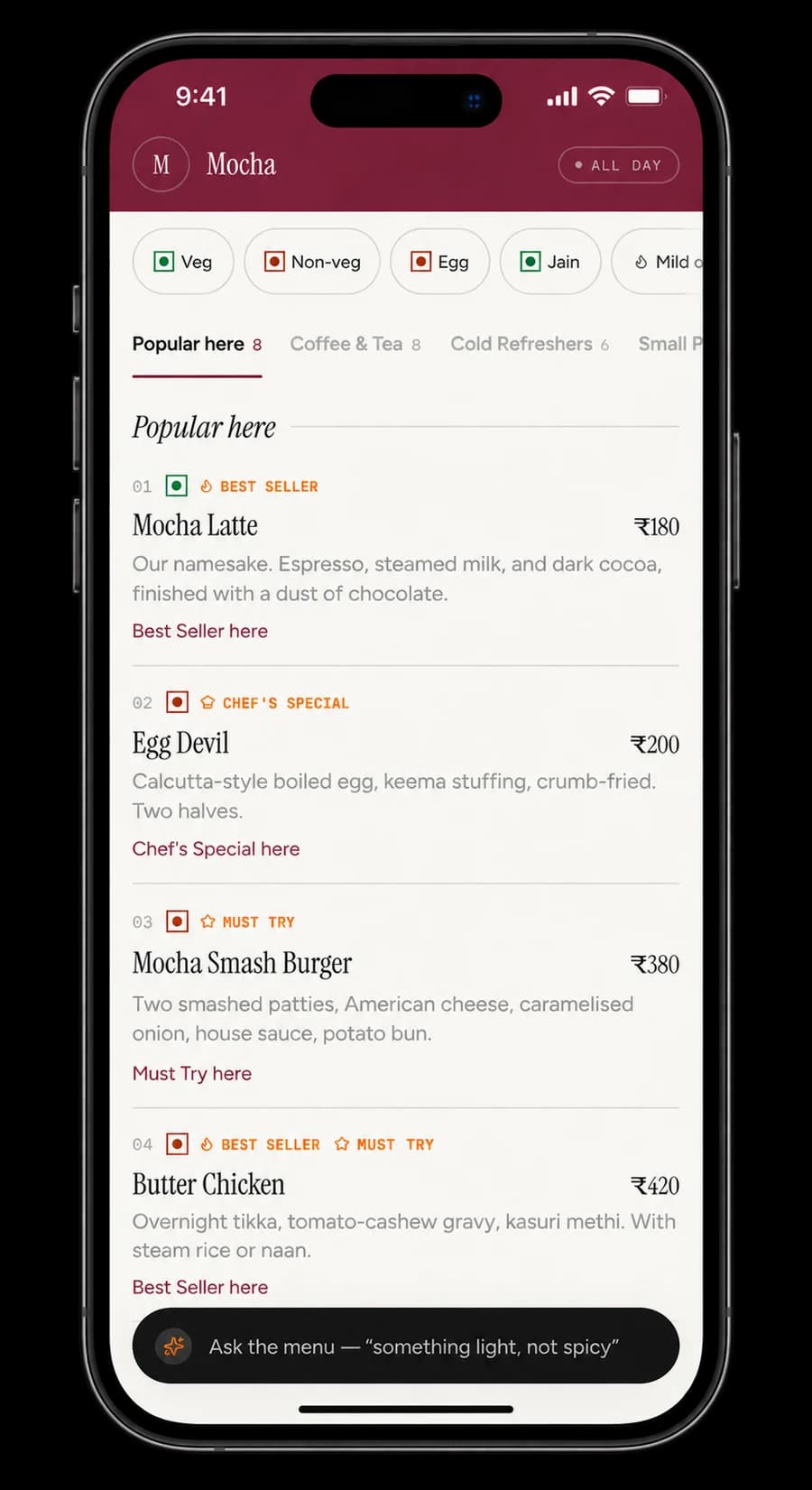
The menu rebuilds itself, guest by guest
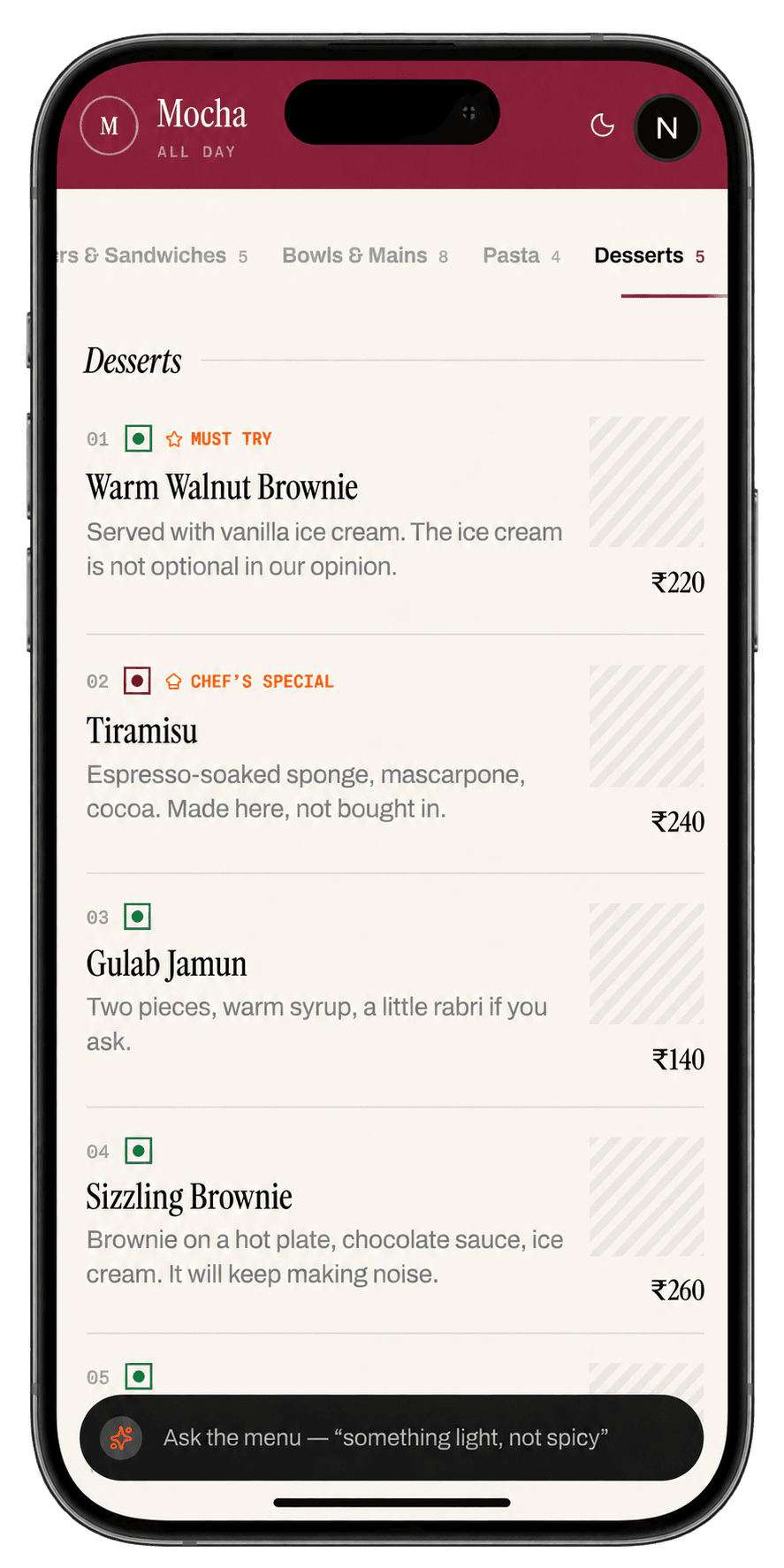
Same categories, same structure — but the dishes inside reorder around what each guest actually likes. It's not a banner bolted on top; the menu itself changes.
Moved to #1 for this guest
Without peanut · confirmed
Contains peanut
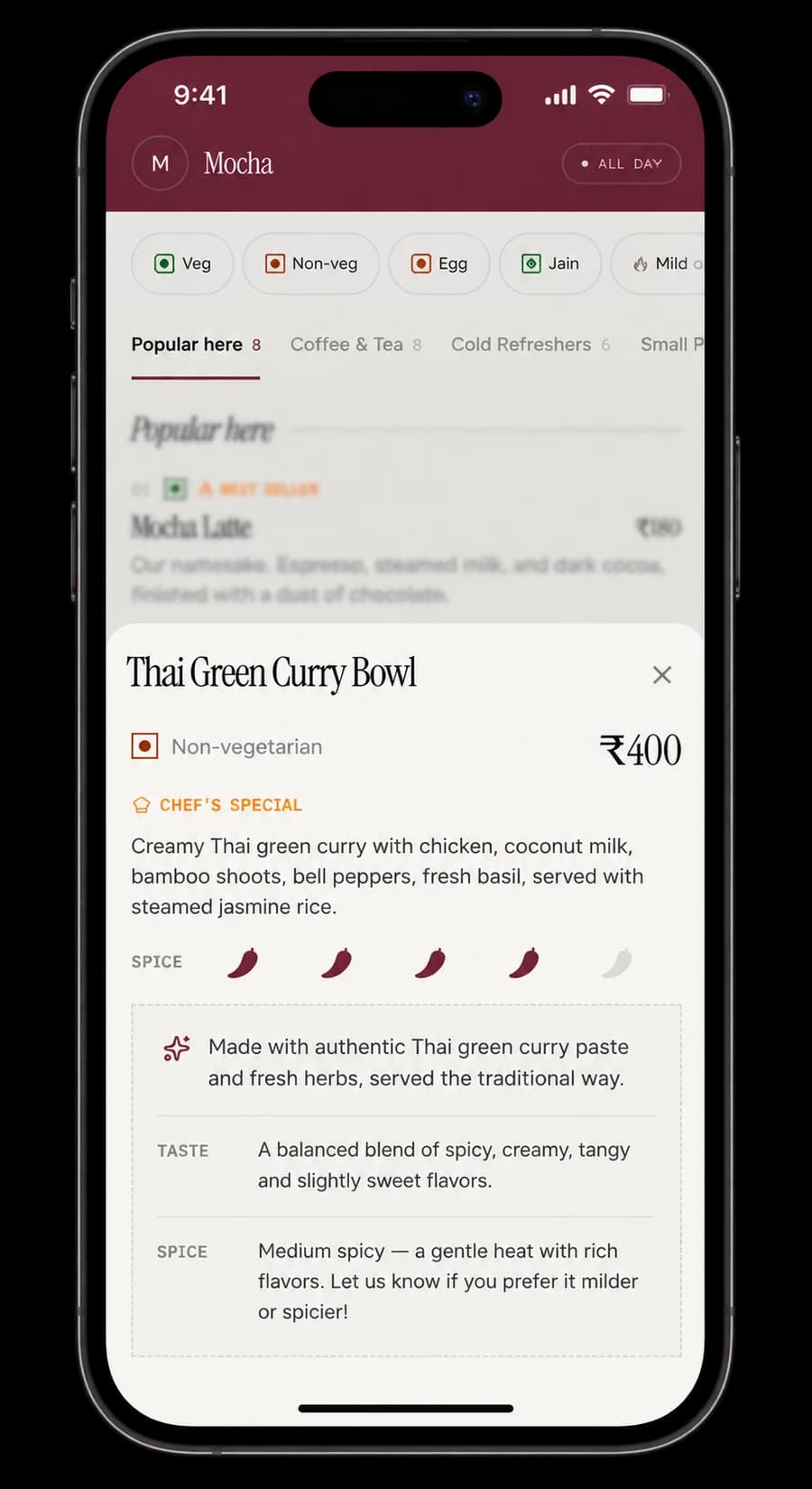
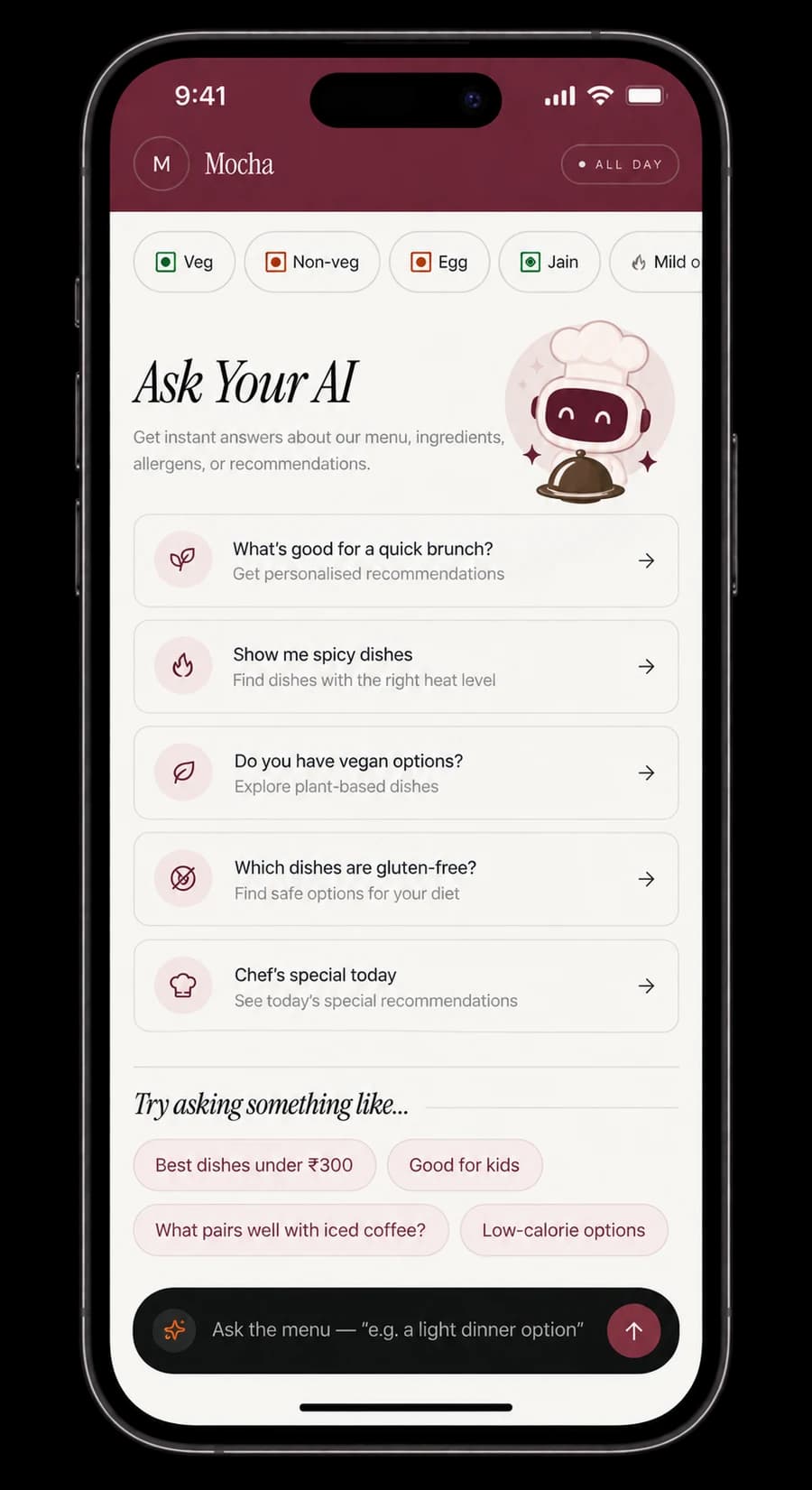
Every dish explains itself — no waiter required
Guests ask in plain language and get a straight answer about ingredients, spice, and taste. Your staff stop re-explaining the same twelve dishes on a busy Friday.
Roasted eggplant in a sweet miso glaze, sesame, spring onion. Mild heat, no nuts, no dairy.
Know exactly what to push — and what to cut
Every ordered dish gets a real verdict while the table is still paying. See what's loved but buried, tag it, and it gets surfaced to every future guest automatically.
Highest like-rate on the menu, ordered 31 times. Tag it and push it up.
Bring the menu you already have
Upload what you've got, or import it straight from Zomato or Swiggy. No retyping a single dish — you're structured and ready to tag in minutes.
A photo, PDF, or Word doc. We extract dishes, prices, and categories automatically.
Connect Zomato or Swiggy and your menu comes across as-is — no retyping anything.
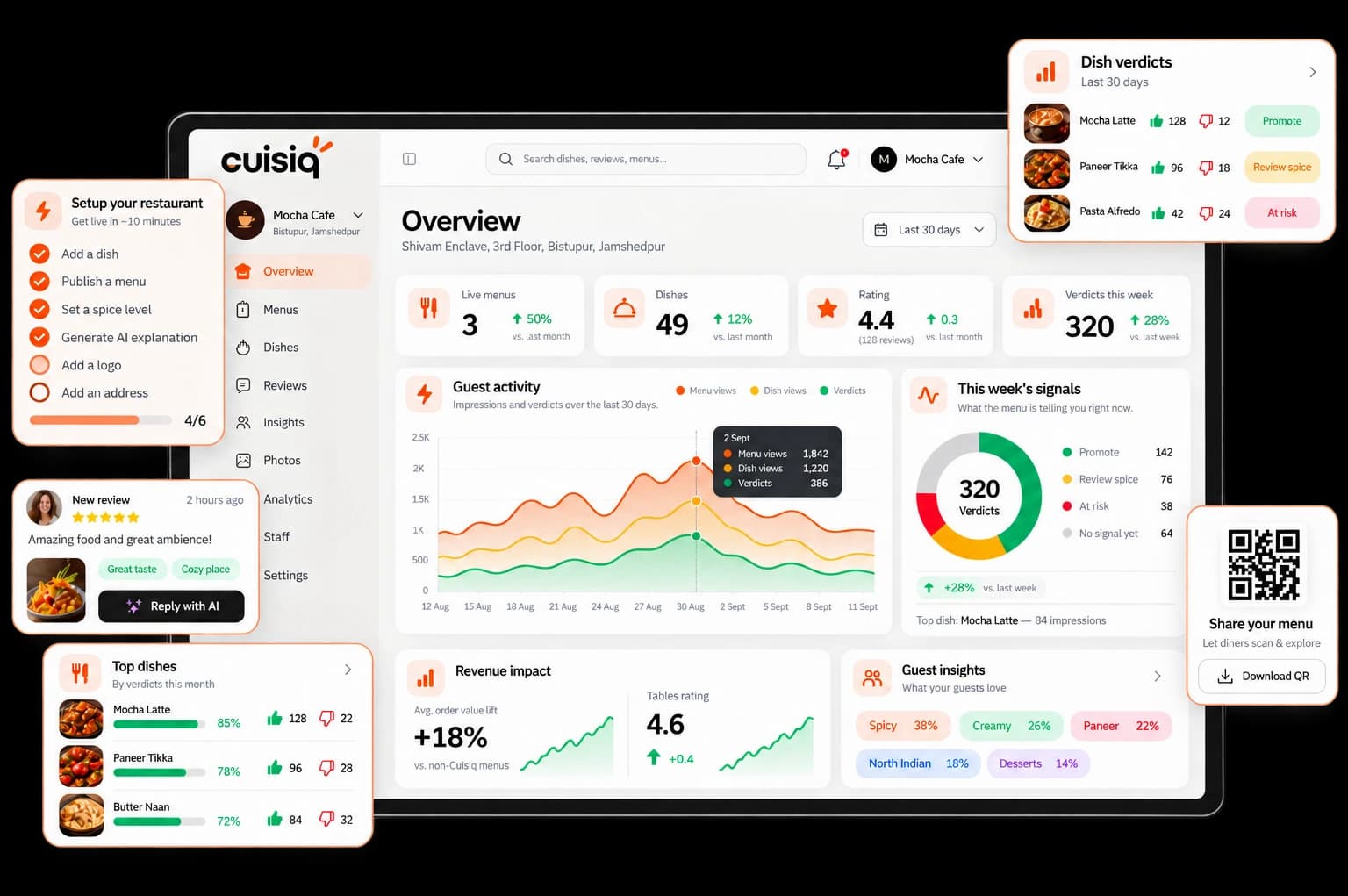
The dashboard that actually runs the room
Not vanity metrics. Every number here is something you can act on before your next shift.
Highest like-rate on the menu, ordered only 31 times — the description is the problem, not the dish.
48% thumbs down, nearly all from mild-tolerance guests. Label the heat and most dislikes disappear.
Struck out for 1 in 6 guests on peanut conflicts. Consider a nut-free version.
Real dish-level verdicts
Every ordered dish gets a thumbs up or down while the table is still paying — not a star rating for the evening.
Auto-promote your winners
Tag a Best Seller or Chef's Special once — it gets surfaced higher for every guest from then on, automatically.
Edit your live menu instantly
Prices, photos, descriptions, tags — change them and guests see it on their next scan. No reprint, no waiting.
A weekly digest, not a habit
The numbers that matter land in your inbox every Monday. No dashboard to remember to check.
Allergen sign-off queue
Nothing reaches a guest marked safe until your kitchen has actually confirmed it, dish by dish.
Recognises regulars across venues
A guest's taste profile travels with them — so a returning regular is never treated like a stranger.
Three leaks that never appear on a P&L
Each one is a decision your kitchen makes every week without information it could have had. That is exactly why they persist.
The dish nobody scrolls to
Your best-rated plate sits fourteenth on a page of thirty. It reads as a weak seller, gets cut at the next menu change, and takes the regulars it would have made with it.
The regular treated as a stranger
A guest on their sixth visit re-explains their allergy, re-reads the same thirty lines, and orders the safe thing again. Familiarity is the cheapest retention there is, and paper cannot carry it.
The feedback that never arrives
Three guests in a hundred write a review, and it rates the evening rather than the plate. The other ninety-seven had an opinion on every dish and no way to hand it to you.
One system, three places it shows up
Click through what your guests see and what lands on your desk. This is the live product, not a mockup.
Your categories. Their order.
Menu structure is untouched, but the dishes inside each category are rebuilt for every guest — around their own taste. It's not a static PDF anymore, it's a menu your kitchen dynamically rebuilds for whoever's reading it, with one plain sentence saying why a dish moved up.
Because you rate mild, plant-based plates highly
Without peanut · kitchen confirmed
Three steps, and you're in control of all of them
No sales call, no waiting on us. Sign up, build your menu your way, and go live the same day.
Sign up and bring your menu
Upload a photo, PDF, or Word file — or import it straight from Zomato, Swiggy, or any platform you're already listed on. Either way, your menu is structured into dishes, prices, and categories instantly.
Tag what matters
Mark spice levels, allergens, and your Best Sellers or Chef's Specials. Takes minutes, and it's what powers every reorder and recommendation guests see.
Put the QR code on the table
Guests scan like they always did. From the first scan you're collecting dish-level signal, your dashboard starts filling with real analytics, and the menu starts learning your room.
A QR menu digitises. A review site summarises. Neither remembers.
| CAPABILITY | QR MENU | REVIEW SITES | TASTEGRAPH |
|---|---|---|---|
| Reorders itself around each guest's taste | No | No | Yes |
| Recognises a returning guest | No | No | Across venues |
| Tells you which dish to push, and which to cut | No | Indirectly | With evidence |
| Feedback per dish, not per evening | No | Aggregate only | Per dish |
| No printing, instant updates | Yes | No | Yes |
| Allergen check before ordering | Static list | No | Per guest |
On 40 covers a night, 11% is about ₹1.9 lakh a month
At a ₹1,200 average cover. The subscription is a fraction of that, and the performance component is charged only on measured incremental order value — if the recommendations do not move the number, you do not pay it.
Illustrative, from real restaurant averages over 30 days. Your figure is measured against your own control period.
“I cut two dishes and rewrote four descriptions in the first month. I have never had that kind of information about my own kitchen — and my regulars noticed before I told them anything had changed.”
“The dashboard showed us Kadhai Paneer had the best like-rate on the menu and nobody knew — it was buried on page two. We tagged it Chef's Special, it moved up for every guest, and it's outselling dishes twice its price now.”
Guest data stays the guest's
You get aggregated, anonymised dish performance. Guests can export, pause or delete their profile whenever they like, and no individual data is sold.
Placement is not for sale
No restaurant can pay to rank higher for a guest. The day ranking becomes an ad slot, every recommendation on the platform is worth nothing.
Allergens require a human
Auto-extracted allergen tags stay hidden from guests until your kitchen confirms them. Safety-critical data is never left to a model alone.
Questions before you sign up
Your digital menu is ready to build.
Upload your menu or import it from Zomato and Swiggy. Sign up, go live, and start learning your regulars' taste from the very first scan.